Small is kind
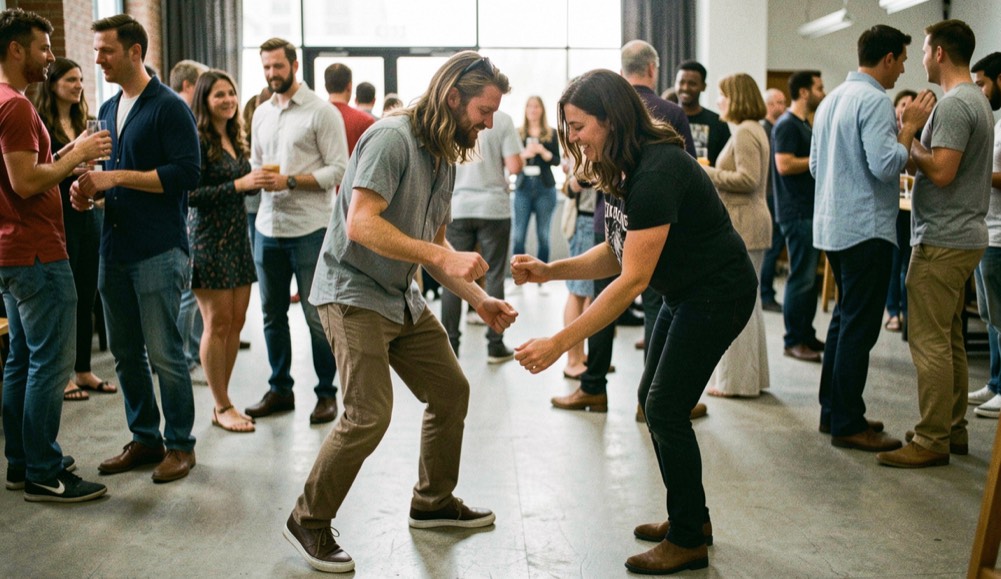
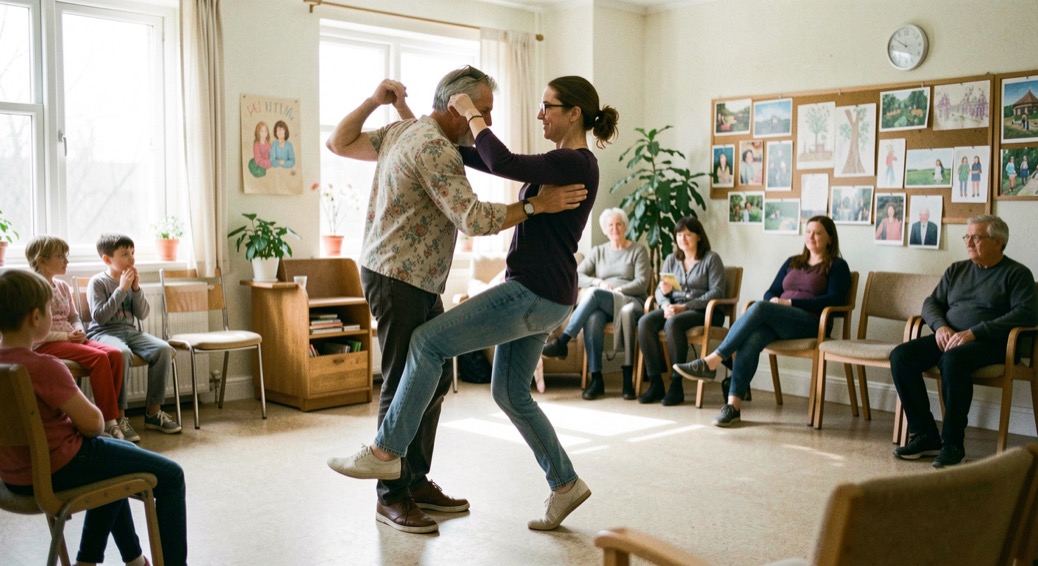
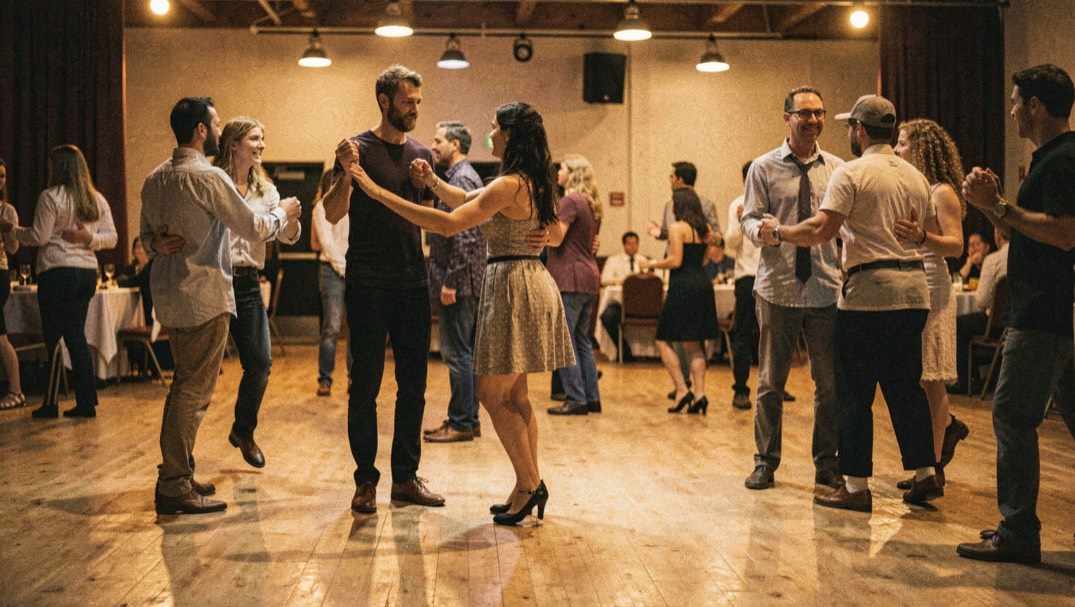
A crowded floor rewards compact patterns, eyes that scan before a turn and arms that stay near the body. A dance that feels controlled to you should also leave room for the couple behind you. Floor etiquette is not a demand that everyone dance the same way. It is a shared agreement that each person notices the traffic and adjusts before a collision becomes someone else’s problem.
Use the edges intelligently
Many rooms develop a natural flow, with travelling couples moving around a perimeter and stationary dancers using the centre. The arrangement changes with the dance and the venue, so watch before assuming. Do not stop in the active lane to discuss a move. If you need to teach, record a video or fix a shoe, step out and return when there is space.
A safety protocol
Before a larger turn, check the space with your eyes and keep the movement within the connection you have established. If you bump someone, stop long enough to ask whether they are okay, apologise without defending the choice and then make the next pattern smaller. Organizers should make floor rules visible and give newcomers a person to ask. Safety is a design task as well as a dancer habit.
What to leave out
The archived rules warned against lifts, drops, dips, aerials, smoking and standing on the dance floor. Current venues set their own policies, but the reason remains legible: surprise hazards change the risk for everyone nearby. A move is not justified because a dancer can execute it. It belongs only when the room, partner, floor and event format make it appropriate.
The error of moralising
Etiquette fails when it becomes a way to rank people. A newcomer who travels too far may need a clear explanation and a safe reset, not public embarrassment. A regular who ignores the same boundary needs accountability without turning the whole floor into a courtroom. Name the behaviour, repair the immediate risk and give the person a practical next step.
A room-level example
A full Tuesday social has a narrow lane near the bandstand and a quiet corner near the wall. A lead who wants to try a travelling pattern waits for a gap, checks the follower’s comfort and returns to a basic when the crowd closes. A volunteer points a new couple toward the open area. These tiny decisions let a mixed-level room keep dancing.
Source trail and limits
The archived floor rules are evidence of one club’s historical expectations, not a universal code. Current organizers and venues should be consulted for present policies. The American Bop Association and current Cincinnati organizers offer broader context, but the most reliable answer on a given night remains the person responsible for that room.
Read the room, name the source and leave space for the next dancer. That is a useful rule whether the page is an archive record or a current lead.